Austin's Best Bat Removal
We've been voted Austin's best bat removal company the past two years!
Get in touch
Bat Experts
Rapid Response
Trained & Educated
Licensed & Certified
About Austin Bat Removal
Welcome to austinbatremoval.com. We are the only qualified bat removal company in Austin, Texas. The signs of a bat infestation can vary depending on what kind of species that you are dealing with, and also the nature of your home, as some properties will allow sound to travel more quickly than others. It can be milky white stains from the urine and droppings on the exterior of your property, or the musty smell of their droppings inside the property that tips you off rather than the sounds of their activity at dusk or dawn. However your suspicions are raised, your first call should be to us so that we can nip the problem in the bud, and make sure any bat infestation is identified and removed as quickly as possible to minimize the damage that the bats can cause. We can have a technician with you within 24 hours, and they will examine the property and the infestation of the property, before offering a quote for the work, and explaining how they will resolve your bat problem. Our friendly team is also here to take your call 24/7, so whenever you start to identify that you may have a bat problem, do not hesitate to give us a call. If you are worried about hiring a company to deal with the problem, we have been helping people in the area for over ten years, and you can check out the many reviews that our lovely customers have left for us on sites such as Yelp and Facebook. We operate 24-7-365, so don't hesitate to call us at 737-977-9001 to discuss your bat problem and schedule a fast appointment.
Residential
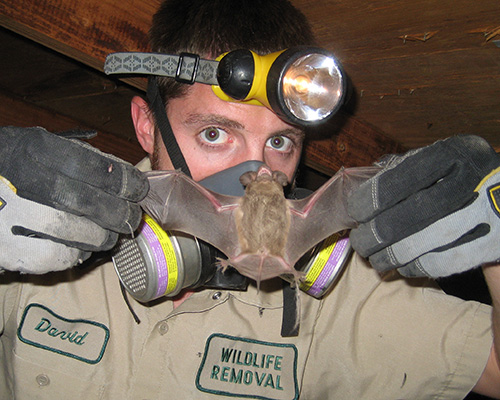
We are experts at removing bats from residential properties. Whether you have a single bat trapped in your house, a colony roosting in your attic, and/or various other problems, there is no need to worry! During our removal process, we make sure to inspect your entire home carefully, tracking down all the entrypoints bats are using to invade your place. Next, we perform a process called live exclusion (where no bats are harmed and all exit your property), then seal all entry holes completely shut. We also take care of the cleanup process after, so your home is safe and clean!
Learn MoreCommercial
Besides residential areas, we also have a wealth of experience removing bats from commercial properties! We begin by investigating the area for possible bat entrances, covering holes even as small as 1/4 of an inch. Through our live exclusion process, bats leave the building through one-way exits, and we seal up every hole afterward. Once the bats have been removed, we perform a cleanup process. This includes dealing with guano, replacing damaged insulation, and decontaminating the place.
Learn More
Contact us for bat removal today!
What Our Customers Say
I had a bat flying around in my house at 9pm, and CITY bat removal came right out and caught it in a net.
Sarah Lakewood
I had an annoying colony of bats stuck in my attic for a while before I finally decided to call for help. They were able to quickly and thoroughly solve the problem!
Brandon Chung
They did a great job clearing my attic of bats and didn't hurt any of the creatures.
Charlotte Demers
The technicians at CITY Bat Removal are skilled, professional, and know exactly what they're doing. Would highly recommend.
Mark O'Connor
My house stank of bats and their guano inside my wall. CITY Bat Removal not only removed the bats, they also got rid of the smell!
Alexis Ramirez
.jpg)
How to Keep Bats Out of Barns
Bats like to roost in places that are dark, away from the sun. They like out-of-the-way places that are uninterrupted by other creatures, human or predator alike. Generally, a colony is made up of multiple bats, and during springtime, several have birthed babies. These mammals are associated with some superstition and have faced general dislike. One of the many places they like to call home is barns.
Inappropriate Homes – Close to Humans
Certain places should be off-limits for bats. Places like your attic or the eves of your houses come to mind. They can cause a lot of damage and mess from eating and droppings. Guano can have a variety of diseases and when it dries, the powder is dangerous to inhale. That means letting them settle around children's playhouses is a bad idea.
Close, but Not Too Close
One major reason to let a colony of bats stay on larger properties includes insect control. A single bat can eat anywhere from 600 to 1,000 insects in an hour. Every night, bats can eat anywhere from 6,000 to 8,000 insects. The trick is finding a proper place for them that is not too close to you and your family.
Protection for the Ecosystem
It is illegal to kill a bat because of how much they contribute to the ecosystem. That means that if you decide that they are not welcome, you should consult a professional on ways to move them. There are certainly better places, including old barns and sheds, inside the hollows and branches of trees, specially designed bat houses, and other more obscure places around the property.
Giving the bats a place to go that you want them to be is easier than simply evicting them. Despite their appearance and the rumors surrounding them, bats are quite vulnerable. They are relatively defenseless compared to most predators.
Change the Attractions
A good way to encourage a bat colony to move is to eliminate their attraction to the place. Start with food and focus on decreasing the number of insects or nests in the area. Change the birdbath water multiple times a week and move these structures away from your house. Check your gutters and clear the debris that could hold water or prevent it from draining. Look around the property for any place water can collect, such as buckets or trash cans. Once there are fewer food and water sources to attract them, the bats will move to find new sources.
Decoys for Bats
Because of the way that bats move around, flying using echolocation, things that are good decoys for other flying pests do not always work. Tinfoil, mylar balls, and mirrors are partially effective tools that reflect light in a very distracting manner. In general, light and sound work well with bats, especially during the day. Certain animal repellants can be effective too, but be certain of what is inside them as the chemicals might be harmful to have around children or other animals.
There are some issues with decoys, though. With stationary objects, they can simply fly around them with their expert maneuverability. Lights, while annoying in darker spaces, will attract insects which is their main food supply. Animal repellants are something that most bats can adjust to, getting used to the texture, taste, or scent of the product rendering it useless against them. Most of these methods are only effective if the colony has not gotten too large. The more bats, the less likely these will be effective.
When to Move the Colony
One of the biggest problems of moving any bat colony is knowing when it is appropriate to move them. Early spring, before the first birthing, is a decent time to encourage movement and does not require professional services either. Mid-spring to early summer is birthing season and nursing mothers rely on having a haven for their little ones who cannot fly. Keeping the adult bats away from the babies is inhumane and will usually lead to their death.
Late summer is the next option as the baby bats are large enough to fly on their own. This is also a good time to encourage relocation before they choose their winter home for hibernation. Wintertime, when they are in full torpor, is one of the worst times to move a colony on your own. This can lead to fear, health issues, and death for the bats.